

When the Powerful Use Humor
Having fun at the expense of others drives a wedge

“Laughter always arises from a gaiety of disposition, absolutely incompatible with contempt and indignation.”
— Voltaire, 1736
Nowhere in history is the first laugh recorded. Not in pictographs, not in paintings, not in hieroglyphics.
But we do know that laughter – closely associated with humor – goes back tens of millions of years.1
However, the oldest joke on record is from around 1900 B.C. in ancient Sumeria (modern-day Iraq) and is a saying about flatulence, of all things. The proverb, written in cuneiform on a clay tablet, reads: “Something which has never occurred since time immemorial; a young woman did not [pass gas] in her husband’s lap.”2
Even the ancients understood the importance of etiquette and comportment (and apparently, the eternal comedy of bodily functions).
Babylonians recorded “yo mama” style riddles (c. 1500 B.C.). Ancient Egyptians entertained pharaohs with jokes. The Greeks formalized comedy as an art, as the plays of Aristophanes openly mocked politicians, philosophers, and public figures of his day.3
Its primary function appears to be social. Laughter creates and deepens bonds. When we share what amuses us, we signal belonging. “You see the world as I do,” the laugh seems to say. “We are safe together.”
And that is where humor becomes both gift and danger.
The Double-Edged Sword
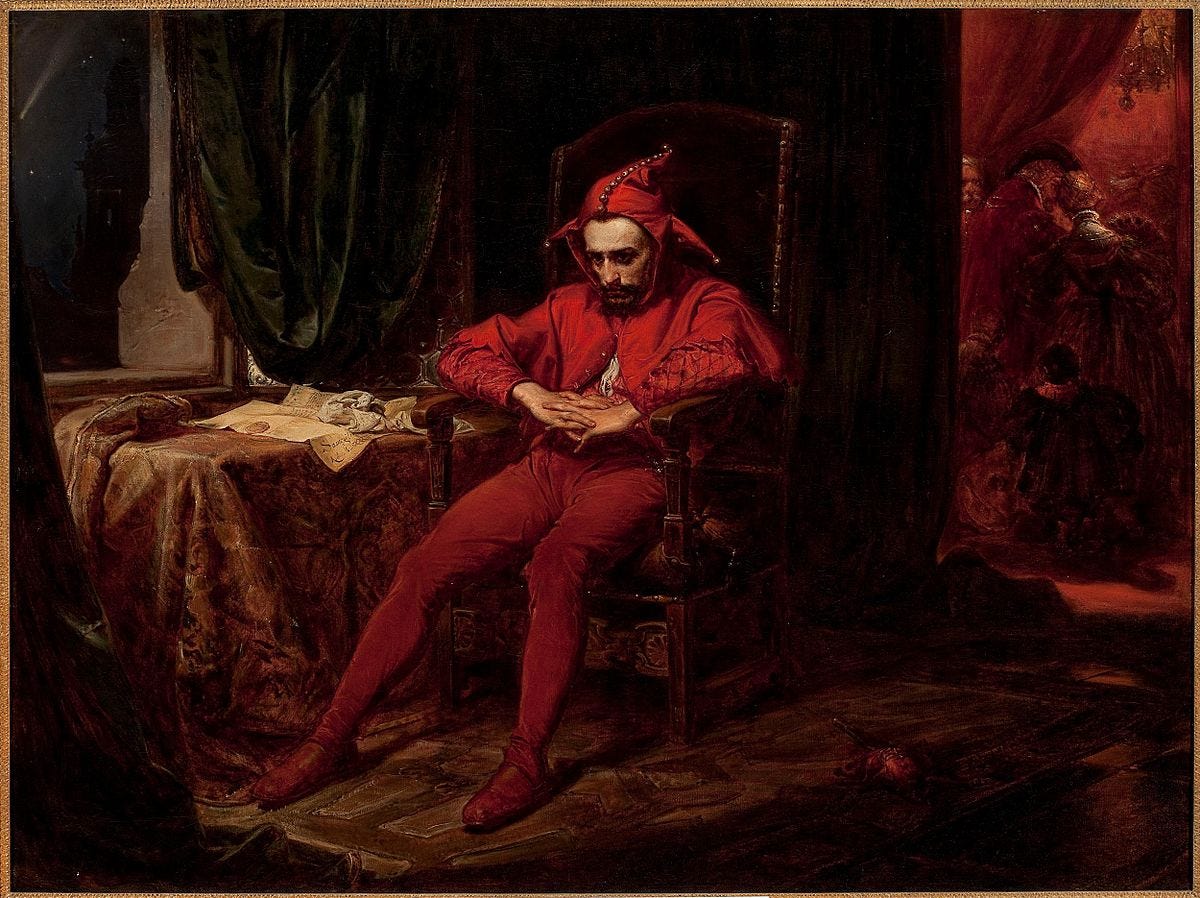
Court jesters in medieval Europe could say what others could not. Their wit provided monarchs with uncomfortable truths disguised as entertainment. In some cases, humor served as a pressure valve — allowing criticism without open rebellion.
Satirists like Jonathan Swift used biting irony to expose injustice. His essay A Modest Proposal was so outrageous in suggesting that impoverished Irish families sell their children as food that it forced readers to confront the cruelty of British policy.4
There is a difference between punching up and punching down. Satire and mockery aimed at the powerful can illuminate truth; humor aimed at the most vulnerable among us corrodes trust — as a certain locker room conversation demonstrated this week.
And leadership, at its best, is about building and maintaining trust with everyone.
The Best Humor Expands a Room
Within the Working Together© Leadership Management System (WTLMS), one of our principles is simple: Have fun, enjoy the journey and each other — no humor at others’ expense.5
That final clause matters.
There is a subtle cruelty in humor that reinforces hierarchy. Whether it’s a sarcastic remark in a meeting, a playful jab that singles someone out, or a story told for a laugh that leaves someone smaller, the result is the same: the room may laugh, but one person goes quiet.
Even outside of hierarchy, a jest that mocks a peer can indicate a poor sense of judgment in a culture that forbids humor at someone else’s expense.
I’ll never forget the time when we were at a company event in New York and I was in the green room with Alan Mulally, Ford’s CEO at the time. I made a witticism that was aimed at someone else — Alan heard it and the withering gaze I received was enough to make me want to crawl into a corner. It set me straight for a lifetime.
The lesson was clear: humor should expand a room, not shrink it.
Finding Humor Within
The safest and often most powerful form of leadership humor is self-deprecation.
“No man ever distinguished himself who could not bear to be laughed at.”
—Maria Edgeworth, 1809
Not false modesty. Not theatrical incompetence. But the simple acknowledgment that we, too, are fallible.
When Abraham Lincoln was accused of being two-faced, he famously replied, “If I had another face, do you think I’d wear this one?” The line disarmed critics because it absorbed the attack rather than deflecting it onto others.
Self-deprecating humor lowers defenses. It signals psychological safety and reminds everyone in the room that authority does not equal infallibility.
It says: We are human together. It shapes our culture.
The Enduring Measure
Humor that binds endures. Humor that belittles decays.
The oldest joke in recorded history was crude, but it was communal. It reflected shared human experience. It did not require humiliation. It did not demand a victim.
Leadership demands the same discipline.
Have fun. Laugh. Tell stories. Relieve tension. Celebrate absurdity. The work of leading people is serious enough; it does not require solemnity at every turn.
But never mistake sharpness for strength.
The measure of a leader is not how cleverly they can wound, but how wisely they can elevate.
Laughter is one of humanity’s oldest tools.
Use humor to build, not break.
There’s so much to learn,
Reconstructing the Evolution of Laughter in Great Apes and Humans, Davila Ross, Marina et al. Current Biology, Volume 19, Issue 13, 1106 - 1111
World’s oldest joke traced back to 1900 BC, Reuters, July 31, 2008
One of Aristophanes’ most famous plays is Lysistrata (411 B.C.) Set during the Peloponnesian War, it follows Lysistrata, a woman who persuades the women of Greece to withhold sexual relations from their husbands until they agree to end the war. The comedy combines sexual humor with a strong anti-war message, highlighting the absurdity of prolonged conflict and the power of collective action by women. Read more at The Controversial Plays of Aristophanes: How the Ancient Greek Father of Comedy Created a Legacy, Ancient Origins
A Modest Proposal: For preventing the children of poor people in Ireland, from being a burden on their parents or country, and for making them beneficial to the publick. by Dr. Jonathan Swift, 1729 (Gutenberg Project)
I find the best humor to make at someone else's expense is self-deprecating. If you're going to make fun of SOMEONE, it had better be you. Jokes about another person are cutting; jokes about other people or other groups are damaging.
Love the Lincoln quote showing real class. I recall writing a paper in a philosophy class known as Contemporary and Moral Issues about a philosopher named Verene. He advocated that the solution to the technological society (jaques Illul) is laughter. I so believe that laughter is healing! Great essay. Thanks for bringing some joy into the points that are especially needed today.