

There's Joy Everywhere
Especially in the little things. You just have to look for it.
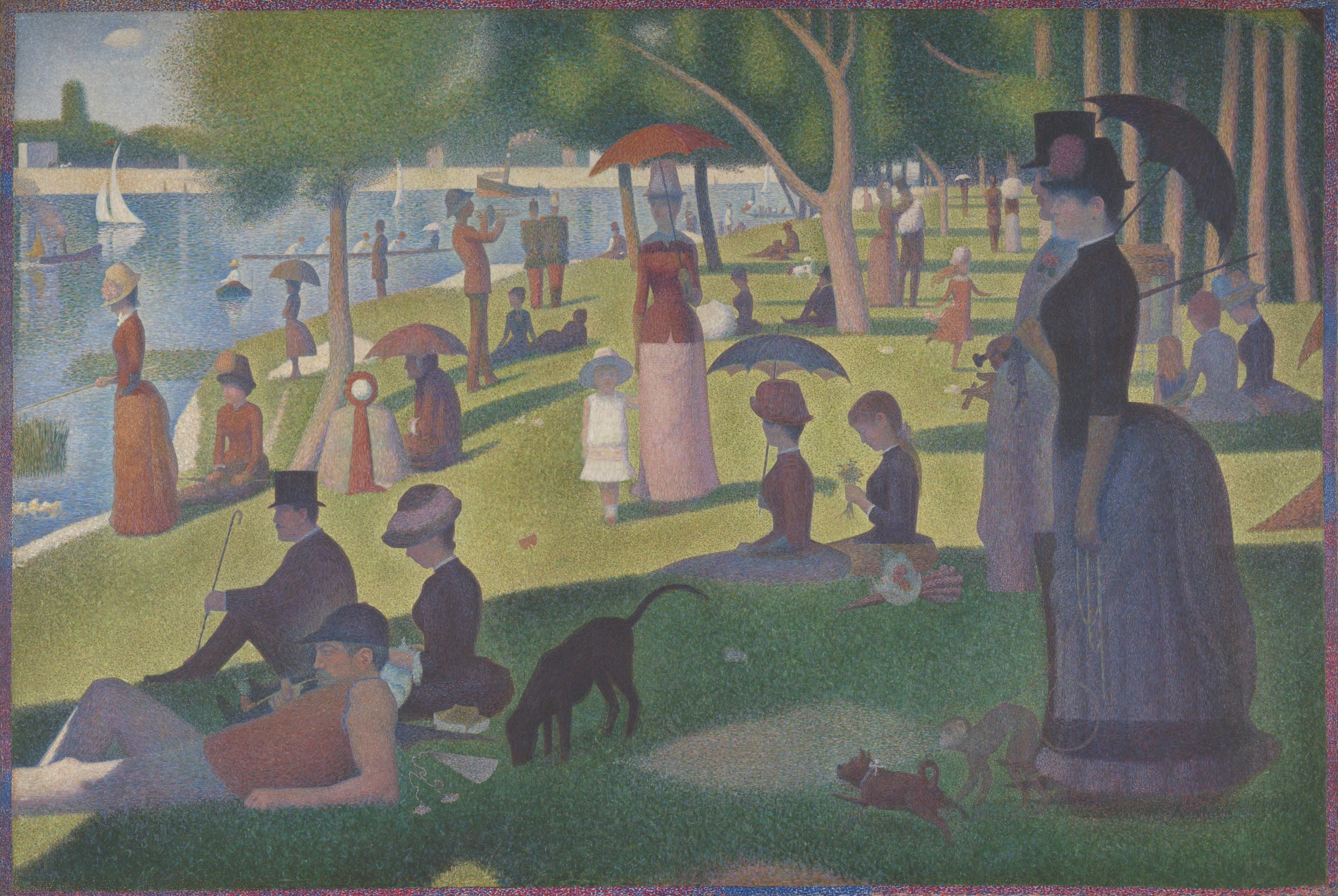
“Laughter always arises from a gaiety of disposition, absolutely incompatible with contempt and indignation.” — Voltaire, 1736
There’s a certain joy to Halloween. The sheer excitement in the little kids is palpable.
They’re thrilled not only to be getting free candy but are energized to show off their costumes.
The little ones are learning the magic of uttering “trick or treat,” the modern-day version of “open sesame” that unlocks the treasures of the kingdom.
As I watch their faces light up with surprise and delight, it fills me with joy knowing that I could put a smile on their faces.
And that’s the magic of expressing joy and wonder: it’s contagious. Did you ever notice that?
We tend to be joyful around joyful people.
That was the concept I discussed with Harry Cohen, author of Be the Sun, Not the Salt, in Episode 5 of Timeless Leadership:
Episode 5: Optimism

Listen now (61 mins) | This week on Timeless Leadership, we'll be discussing the role of Optimism and leadership with Harry Cohen, Ph.D. Specifically, heliotropic leadership. What is heliotropic leadership? Why is being the sun so important? What are some techniques we can use to invite positivity?

Expressing Joy
Pauline Kael was the legendary movie critic for The New Yorker from 1968 to 1991. Her reviews were “witty, biting, highly opinionated, and sharply focused,” according to the Encyclopedia Britannica.
People paid attention to her every word. So when she gave a review for Star Trek II: The Wrath of Khan, Ricardo Montalban, who played Khan, took note when she wrote:
“Montalban’s performance doesn’t show a trace of Fantasy Island. It’s all panache; if he isn’t wearing feathers in his hair you see them there anyway. You know how you always want to laugh at the flourishes that punctuate the end of a flamenco dance, and the dancers don’t let you? Montalban does. His bravado is grandly comic.”
Montalban followed up with this personal letter to Kael, expressing how it made him feel:
![July 7, 1982Dear Miss Kael: The joy and encouragement I derived from your review of "Star Trek II" has to be one of the highlights of my life as an actor. You have provided me with a renewed enthusiasm and optimism much needed at this advanced stage of my career, which has had it's [sic] share of frustration. I am well aware that a critic of your stature should not be thanked for a favorable review anymore then [sic] be resented for an unf[av]or-able one; it is simply that because of you I am filled with joy, and I wanted to express this feeling. Respectfully, Ricardo Montalban](https://substackcdn.com/image/fetch/$s_!1skA!,f_auto,q_auto:good,fl_progressive:steep/https%3A%2F%2Fsubstack-post-media.s3.amazonaws.com%2Fpublic%2Fimages%2Fd5efe33a-5a38-4567-b94f-4d9b590ad27c_843x1124.jpeg "July 7, 1982Dear Miss Kael: The joy and encouragement I derived from your review of \"Star Trek II\" has to be one of the highlights of my life as an actor. You have provided me with a renewed enthusiasm and optimism much needed at this advanced stage of my career, which has had it's [sic] share of frustration. I am well aware that a critic of your stature should not be thanked for a favorable review anymore then [sic] be resented for an unf[av]or-able one; it is simply that because of you I am filled with joy, and I wanted to express this feeling. Respectfully, Ricardo Montalban")
July 7, 1982
Dear Miss Kael:
The joy and encouragement I derived from your review of "Star Trek II" has to be one of the highlights of my life as an actor.
You have provided me with a renewed enthusiasm and optimism much needed at this advanced stage of my career, which has had it's [sic] share of frustration.
I am well aware that a critic of your stature should not be thanked for a favorable review anymore then [sic] be resented for an unf[av]or-able one; it is simply that because of you I am filled with joy, and I wanted to express this feeling.
Respectfully,
Ricardo Montalban

Where Credit Is Due
We tend to give credit to people who are focused on working on big things — things like world hunger, energy independence, or artificial intelligence. Make no mistake: these are important issues that society is grappling with.
And we spend all too much time fawning over billionaires who have brought concepts and ideas to life with a little brilliance and a lot of luck. They deserve credit for their achievements.
But how often do we express appreciation and admiration when people do little things?
While such minutiae are not headline-worthy, they just as deserving of our attention as the grand gestures. Even more so, I would argue.
Why?
Because these are the indicators that tell you something about a person’s character. Like a needle vibrating in response to an earthquake. That in turn means they can do great things.
You can’t motivate an entire company without first motivating one person.
The best leaders I’ve worked with have been those who:
Take the time to recall details about other people.
Marvel at something that might be unnoticeable to anyone else.
Go out of their way to make small but meaningful gestures.
Make small talk but do it in a way that makes you feel noticed.
Show me someone who cares about the little things and I’ll show you someone who is respected, admired, and remembered.
We can find moments of joy through these micro-interactions, whether we give or receive them.
There’s joy everywhere. If we’re willing to take the time to look for it.
How To Get Better at Small Talk

“There is no such thing as conversation. It is an illusion. There are intersecting monologues, that is all.” — Rebecca West, 1935 Making small talk is a real chore for some people. Not in the sense that it’s hard to do, but simply that they dread it.
Thanks, and I’ll see you on the Internet.
A philosopher called Verene wrote in the late 70's about how laughter is the cure to the technological society (replying to a difficult book with that name written by french philosopher Jacques Illull- a book that changed my views greatly so long ago.
I saw that huge painting at the Chicago art museum decades ago. Up close it looks very different than from a distance. what a lesson.