

Flattery and the Fragile Leader
When tyrants and sycophants are mutually exposed
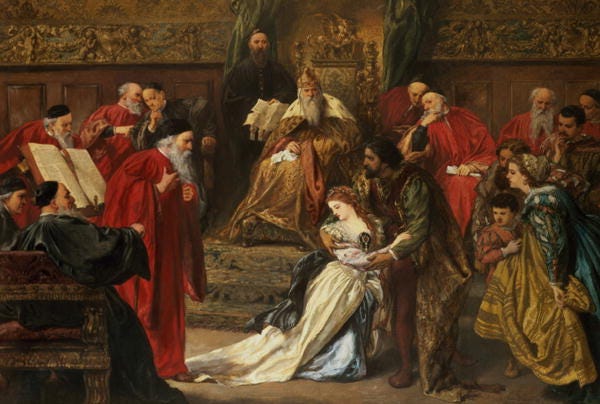
“Who is it that can tell me who I am?”
— William Shakespeare, King Lear, 1606
We underestimate how exhausting it must be to live without an internal compass. The insecure leader — brittle, needy, forever searching the horizon for applause — spends every waking moment begging the world to tell him who he is.
And because such leaders lack the ballast of character, they drift toward anyone who will offer the easy breeze of flattery, no matter how manufactured the wind.
From the Caesars who hired poets to gild their decrees, to the modern executives who cannot cross a conference-room threshold without a chorus of affirmations, the spectacle repeats itself with the regularity of a ritual sacrifice.
And we saw it play out on the world stage today.
The Language of Sycophancy
Shakespeare understood this pathology better than most. King Lear is, after all, a study in the catastrophe that follows when a leader mistakes adulation for affection, and servility for sincerity.1
Lear’s demand that his daughters publicly quantify their love wasn’t merely vanity; it was an admission of emptiness. A king, unsure of his worth, tried to purchase certainty with pageantry.
Goneril and Regan, sensing the opening, performed exactly the kind of obsequious theater that insecure leaders crave. They understood the transaction: give the old man the words he wants, and he will hand you the power you want. The sisters were fluent in the language of sycophancy — hyperbole as strategy, devotion as currency.
And like all such arrangements, the price was integrity. They paid it gladly.
It was Cordelia’s refusal that pierced the illusion. Her quiet “Nothing” became a revelation: genuine loyalty doesn’t need amplification; truth doesn’t require a spotlight.
Nothing may come of nothing, but then again, can we live with ourselves if we sell our souls? It’s a question I’ve pondered before (“While contemplating on this sad fact, I began to wonder just when we abandoned our principles for the promise of riches.“)2
“Thy truth, then, be thy power”
But her restraint rattled a king who only recognized love when it echoed back to him at full volume. He mistook honesty for betrayal, just as he confused flattery with fidelity — a confusion that remains common in leadership circles today.
We still see Lear’s lineage everywhere: leaders who punish candor as disloyalty, reward servility as virtue, and surround themselves with flatterers who mistake proximity to power for purpose.
Just take today’s awarding of the fabricated and ridiculous “FIFA Peace Prize”3:

