

After the Calendar Runs Out
We all have a finite amount of time on this earth. How we spend it will determine how we’re perceived.
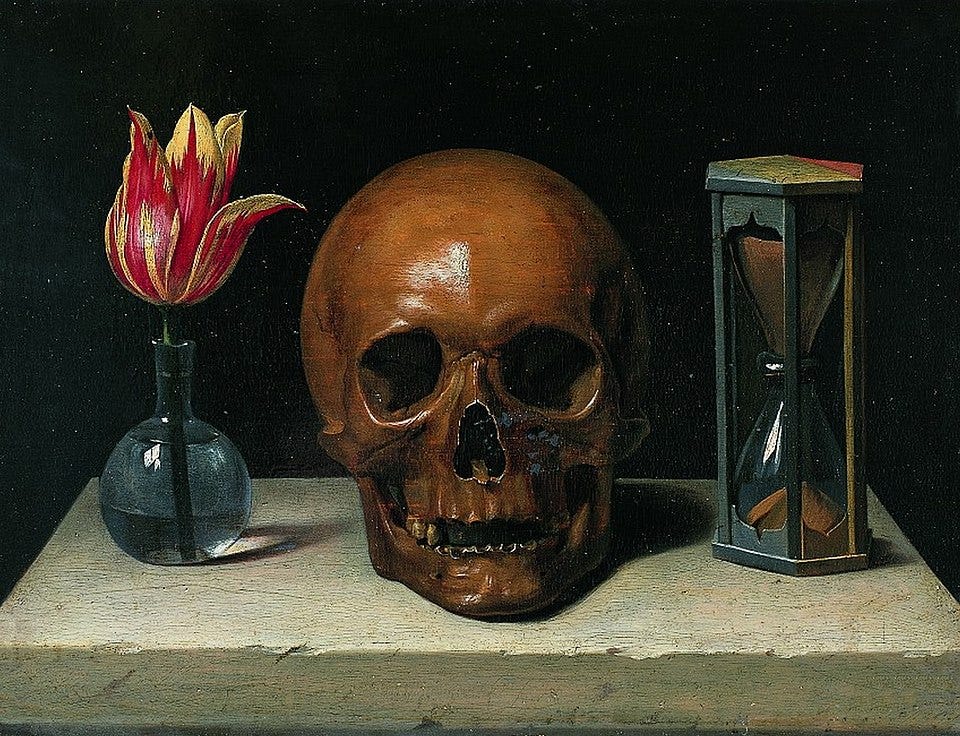

“Clocks are made by men, God creates time. No man can prolong his allotted hours, he can only live them to the fullest.”
— Rod Serling, 1963
Juan Ponce de León has been frozen in popular memory as a fool — an aging conquistador chasing a fairy tale through the swamps of Florida, convinced that somewhere, just beyond the next bend in the river, immortality awaited. The Fountain of Youth has become his epitaph.
The irony is that the story was never his.
After his death, a court historian, Gonzalo Fernández de Oviedo y Valdés, fabricated the tale, reportedly to settle scores and diminish a rival.
In life, Ponce de León was a capable governor and explorer, navigating the brutal realities of empire, power, and ambition. In death, he became a caricature. History, as ever, was less concerned with truth than with narrative.
Time does that. It reduces. It edits. It decides what survives.
A Slow Reckoning
We all begin with the illusion of abundant time. In youth, we treat it as inexhaustible: ripping through calendars, impatient for the next chapter, convinced that the future is an ever-expanding frontier and that we are immortal (or nearly so).
Later, almost without noticing, we begin to ask, “Where did the time go?” Joys, sorrows, triumphs, and regrets accumulate. Time no longer waits for us; it moves on without asking permission.
Somewhere along that arc (if we’re paying attention), we learn an uncomfortable truth: ego is not the center of the universe. Or, more plainly, it’s not all about you.
That realization is the threshold of learning to serve others in our leadership.
“The purity of his virtue was sullied by excessive vanity.”
—Edward Gibbon, 1781
Ego: An Occupational Hazard
Successful people tend to have strong, healthy egos. You don’t get far without one.
But unchecked, ego distorts judgment, narrows curiosity, and quietly corrodes trust. There’s a reason vanity sits among the Seven Deadly Sins.1 Its Latin root, vanitas, carries meanings more damning than pride alone: emptiness, falseness, futility.
That is not how any leader — or any person — hopes to be remembered.
The Disciplines that Outlast You
The question, then, is not whether you have an ego, but how you manage it. In my work with my executive coaching clients, the balance usually comes down to three enduring commitments: learning, service, and relationships.
Learning
You may believe you’re the smartest person in the room. You probably aren’t. And if you are, you’re in the wrong room. Leaders who last surround themselves with people who know more than they do — and listen to them.
Service
You may enjoy the authority that comes with your role, the ability to delegate, to decide, to direct. But leadership is never self-contained. You are always serving someone else: customers, employees, shareholders, communities — even if your name is on the door.
Relationships
You may be tempted by a winner-takes-all worldview, where your success requires someone else’s loss. Time has a way of exposing the shallowness of that bargain. Everything tangible you accumulate stays behind.
I have a new service called Time Stewardship to help you see where time is being silently mismanaged in relationships, not just on your calendar.
It is designed to help you examine how you steward your time — personally and professionally — and how your choices shape expectations, culture, and trust.
See if this is something that’s right for you. I’d love to help.
What Will Be Remembered
Long after you’re gone, what remains will be memories of you: stories told by people who remember how you treated them and the kind of person you were.
That — more than titles, trophies or treasures — becomes your Fountain of Youth.
When you show genuine interest in others, when you listen more than you speak, you become, paradoxically, more interesting yourself. More importantly, you gain access to perspectives, experiences, and wisdom you could never acquire alone.
Time spent learning from others, serving others, and building relationships is rarely wasted.
We all have a finite amount of time.
How are you spending yours?
There’s so much to learn,
Also see “The Seven Social Sins”
I am retired. I have less time and I have more time. It's a gift that I don't take lightly. In my career I learned to be a strategic listener. Now I am learning to be a better empathetic listener. Perfected? Not by a long shot. But the gift of 'more time' is helping.
I have another thought on this, Scott. I don't think that I'm trying to be a better listener because I want to be remembered as being 'that sort of person'.
My motives are more immediate. I try to really hear people more because it feels good. I learn things I didn't know before. I see the sparkle in someone's eyes as they talk and it sends a jolt of serotonin through me. I notice how people gravitate toward me when they realize that I will really listen to them - and that feels good too.
Is it selfish? I don't know.
But I'm going to keep doing it.