

Your Guide Through Uncertainty
Dozens of articles and quotes to inspire leaders on how to lead in uncertain times, as we've learned over the centuries.
“All’s well that ends well, still the fine’s the crown;
Whate’er the course, the end is the renown.”
— William Shakespeare, 1603
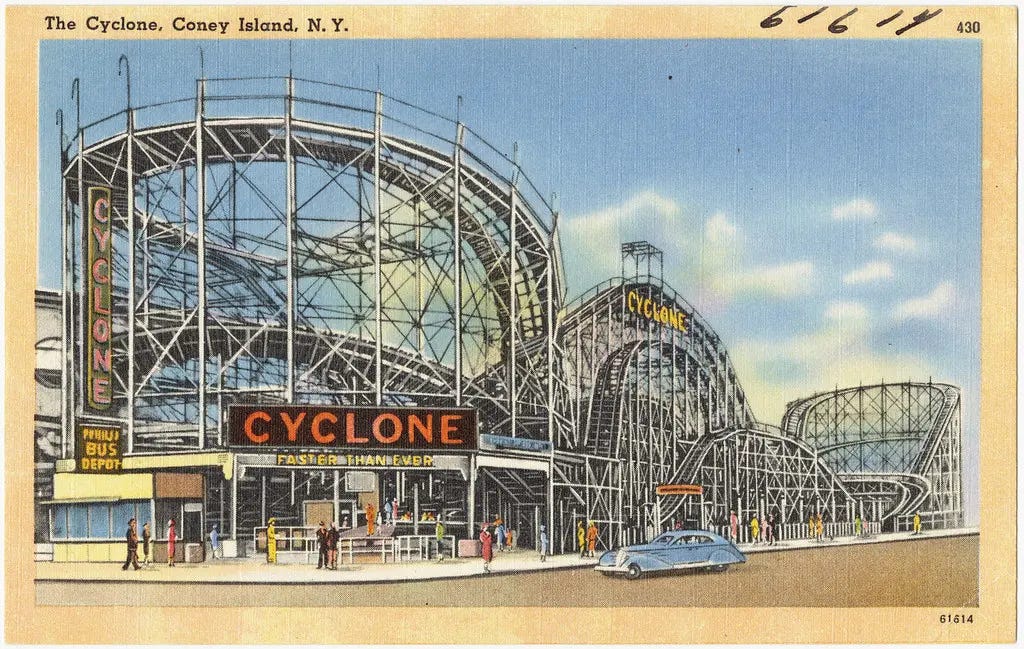
I hate rollercoasters.
That makes me a real downer at amusement parks, as I’m the guy who stays behind to enjoy the bumper cars and carousel.
But I just don’t like the feeling of nervous anticipation as the clickety-clackety cars climb the incline, the feeling of sheer dread as we loiter at the top as if the cars are reconsidering this rash decision, and the tightening of my stomach as we lurch toward the bottom.
Yes, I know there are hundreds of kinds of roller coasters, and they’re all different. On some, you’ll find yourself upside down, in others you may go backward, and yet others may operate indoors in the dark.
For thrill-seekers, there’s a balance between the expected and the unknown: they eagerly queue for another ride on a favorite coaster; or they have no idea what’s coming and that’s what excites and scares them.
And that’s why, when uncertainty looms in life, people get freaked out. It’s the not knowing.
“The oldest and strongest emotion of mankind is fear, and the oldest and strongest kind of fear is fear of the unknown.”
— H.P. Lovecraft, 1927

Unease of Use
And this is the problem with the challenges in life: we don’t always know when we’ll reach an endpoint.
There are challenges we don’t anticipate, complexities that sow doubt in our plans, and the interminable waiting when control is out of our hands.
This is precisely why it’s important to know what your goal is, to state it clearly, and to mark your progress toward it.
Even if it feels as if things are stuck, communicating relentlessly with your stakeholders is a way to keep them aligned with the vision. Doing so helps them understand they’re part of the plan and that everyone is still pointed in the same direction.

Be Like Warren Buffett
The Oracle of Omaha is widely admired for his uncanny ability to pick companies and industries that provide healthy growth for shareholders. His secret from doing this for six decades?
Ignore the anxious futurists.
Everyone else is worried about what will change in the next 10 years. Instead of wasting energy on something we can’t accurately predict, try this instead:
Focus on what doesn’t change.
Look for the constants in behaviors and actions, and rather than speculating on technology that may never arrive, place your bet on human nature.
His biographer explained how Warren Buffett approaches it:
“But pattern recognition is his default way of thinking. It creates an impulse always to connect new knowledge to old and to primarily be interested in new knowledge that genuinely builds on the old.”
I’d take that bet.
The difference between tragedy and comedy is in the conclusion: hope or despair.
How are you going to lead toward the conclusion?
When you don’t yet know how things end in a given situation, the best you can do is to inspire others, keeping your character and values intact, reminding others and yourself “all’s well that ends well.”
Below, I’ve collected 12 essays and 12 quotes from our archives that deal with uncertainty, crisis, fear, hope, character, and leadership. As you read them, you’ll find links to dozens of other essays. It’s like a nesting doll of wisdom. It’s an exclusive benefit for members of our community — and you can join us!

Related entries from the Timeless & Timely archives
1. In Uncertain Times, Look for Character
What if D-Day failed? What if the first astronauts to set foot on the moon didn’t make it home? Leaders anticipated failure as well as success in these circumstances and in many others throughout history. The character of the men and women involved is what saw them through.
2. What We Look for From Leaders During a Crisis
No one wants to be in a crisis, but we find ourselves there from time to time. This is when your people look to you for guidance. What do they want? Courage, integrity, generosity, resilience, and empathy. In short, character.
