

Yes, the Pope Was Pontificating
Spoiler alert: that’s his job. From tyrant to lord: what leadership words remember that leaders forget

Welcome to Off the Clock — where we step away from the urgent and indulge the enduring.
Every other Saturday, I send a private note to subscribers exploring the curious corners of language, history, and the words we think we know—but don’t.
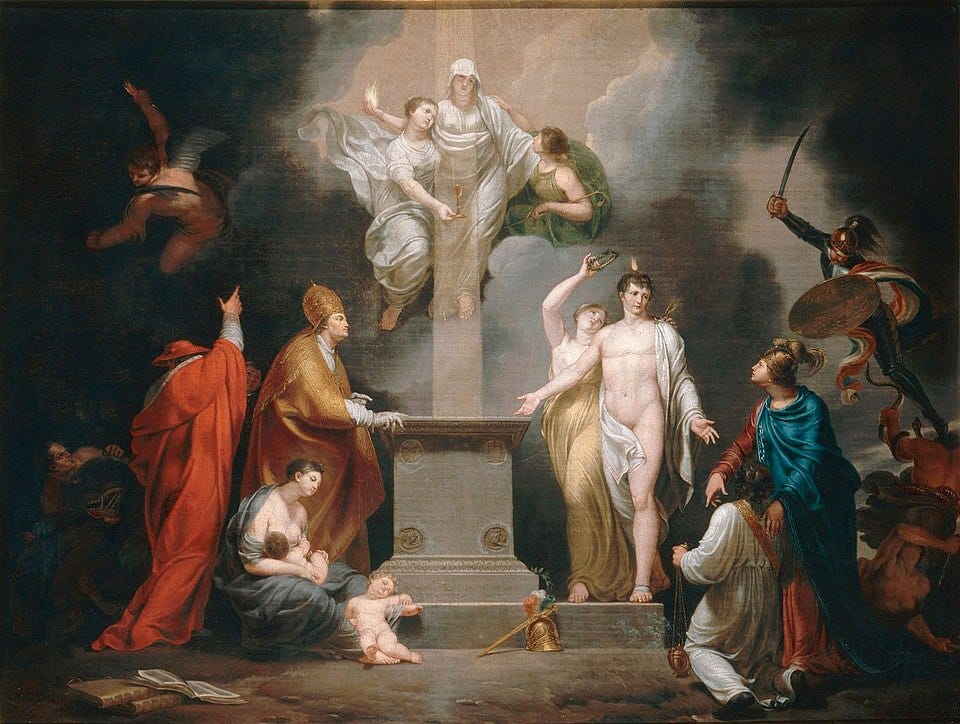
There is a certain satisfaction in catching someone in a contradiction they didn’t know they were making.
Recently, someone online complained that the Pope should not be pontificating. Yes, you read that correctly. They probably meant that he was being overbearing; they probably did not mean to observe that the Pope was doing exactly what a pontiff does — and indeed, what the word was built to describe.
Pontificate comes directly from pontifex, the Latin title for a Roman priest — and later, of course, the Bishop of Rome himself. The pontifex was, etymologically, a “bridge-builder”: pons (bridge) + facere (to make). Whether the original priests were literal engineers of Roman infrastructure or whether the bridge was always metaphorical — a span between the human and divine — remains debated. What is not debated is that when the pontifex spoke, he spoke with the full weight of sacred authority.
So yes: the Pope was pontificating. Quite correctly.
But he is hardly alone in this etymological entrapment.
Dictators, we are told, are the great villains of political history. The word itself has become a slur. Yet the Roman dictator was a legal office — an emergency magistrate appointed by the Senate in times of crisis, given extraordinary powers for a period not exceeding six months.
The root is simply dicere: to say, to declare. The dictator was, at his origin, merely the one whose word was law. That the word degraded alongside the office is a study in how language absorbs history’s disappointments.
A president presides. This is almost too obvious to mention, and yet how rarely we notice it. From praesidere, to sit before, to sit at the head. The president is literally the one who takes the chair at the front of the room. (Students of leadership will note that the chair one chooses or is given says everything.)

🔒 This post is for subscribers. What follows is the full etymological tour — through tyrants, regents, senators, lords, and more. Oh, and a delicious explanation as to the choice of image above. If any of that sounds worth a few minutes of your week, the door is just below.

