

Why Success Requires Working Together
Or: what the flock?
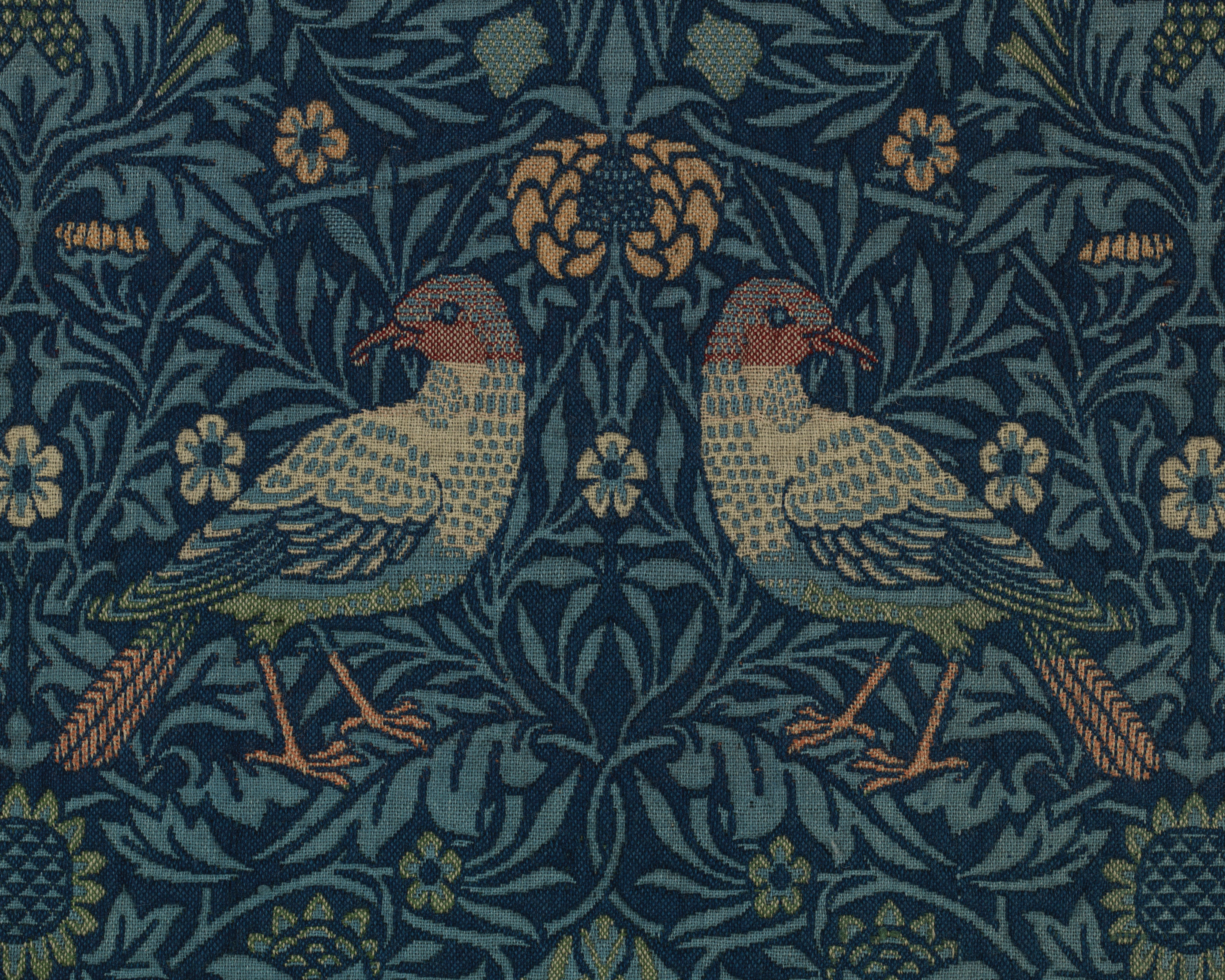
“The behaviour of large groups can be predicted from a few simple rules — provided you know what each individual is paying attention to.”
— Iain Couzin, 2013
In 1986, a software engineer named Craig Reynolds set out to solve a problem that had baffled ornithologists for half a century.
The problem was this: a murmuration of starlings — sometimes a hundred thousand birds, sometimes more — moves as if it were a single organism. You’ve seen these flocks as they pour across the sky in shapes no choreographer could direct, turning on what looks like a shared instinct. And like me, I’ll bet you’ve wondered why the flock never collides with itself.
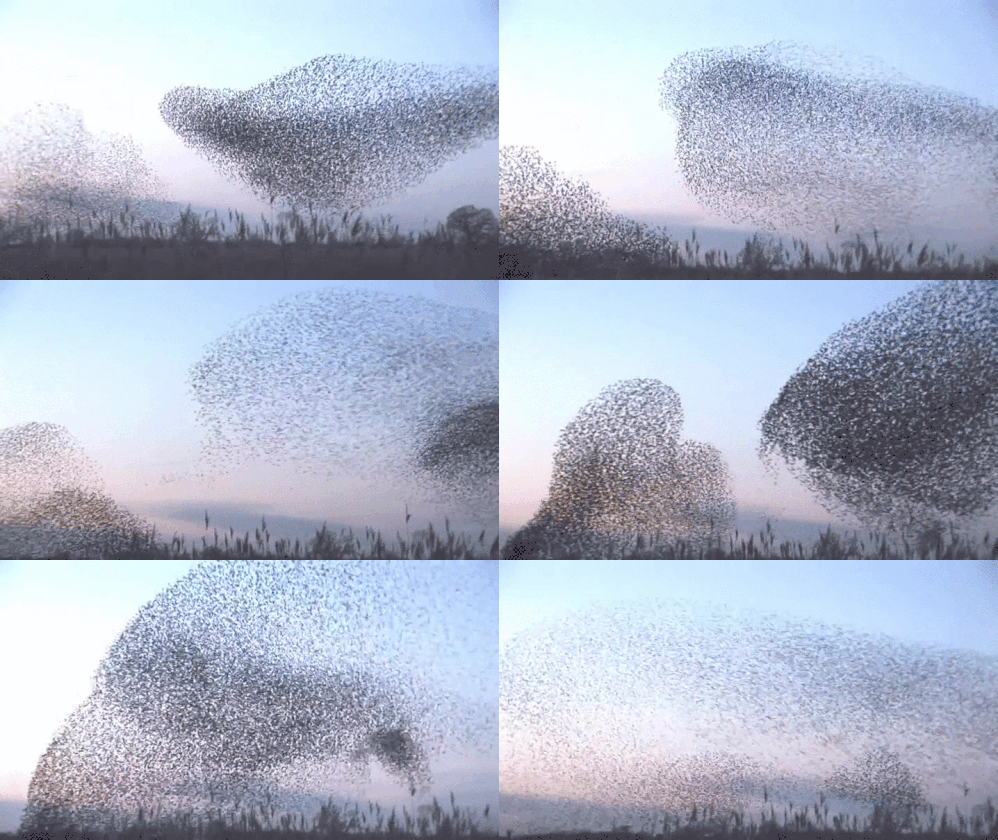
Reynolds figured it out, working in a computer-graphics lab rather than a field with binoculars. He proposed that each bird was following three simple rules, applied only to the handful of neighbors directly around it:
Separation. Don’t crowd the birds next to you.
Alignment. Steer in roughly the same direction they’re steering.
The Award-Winning Secret
Think about this for a moment. All of this is possible when:
No bird is thinking about the flock.
No bird can see the flock.
No bird is in charge of the flock.
There is no executive starling at the head of the V, no consultant starling running an offsite to clarify the mission. Each bird is paying attention to the four or five birds nearest to it — and out of that local, almost trivial calculation, a murmuration emerges that can darken the sky over Brighton Pier and turn on a dime.
Reynolds’ boids program3 won him an Academy Award in 1998.4 More importantly, when behavioral biologists tested his rules in the wild, they found them to be substantially correct. The same logic explains how mosquitofish shoal, how starlings turn, how pedestrians self-organize into the lanes you can see from any second-story window above a busy crosswalk in Tokyo or New York.
It also explains something that the consultants and the corporate poster-printers have missed for the better part of a generation.
The Trouble with Values Alone
Earlier this week, a newsletter from Fortune relayed an observation about Dov Seidman, who has been studying moral leadership in business for the better part of three decades.5 The 2026 study from his HOW Institute for Society found that 94 percent of employees believe the need for moral leadership is more urgent than ever — and that fewer than ten percent of CEOs are judged to be providing any.6
The takeaway from one attendee of Seidman’s 92nd Y talk was this: it comes down to behaviors and practices, not intent.
“Generic values are meaningless in most contexts. Talk about the behaviors that you want to see modeled in interactions — in short, how people treat each other — and reward that.”
This is not a new idea, but it is one that the modern corporation has worked extraordinarily hard to forget.
Consider how most organizations talk about their values. They are abstract nouns: integrity, excellence, accountability, innovation, respect. They are printed on posters in the elevator bank, embossed on the cardstock of the new-hire onboarding folder, recited by the CEO in the all-hands and then never spoken of again until next year’s all-hands. Like the heat-death of the universe,7 they are technically operative everywhere and observable nowhere.
The reason they fail to shape behavior is the same reason no bird in the murmuration is thinking about the flock.
A value, in the abstract, is invisible. It can’t be copied, aligned to, or separated from. It’s “outside the neighborhood radius,” to borrow Reynolds’ language.
You know what people actually see, every day?
The four or five people closest to them, at work and at home. The way their manager handles a missed deadline. The way the executive who came late to the meeting pulled up a chair. The way a date spoke to the waiter when an order was incorrect. The way a parent responded — or didn’t — when someone raised a difficult question.
Those are the local rules. Those are the things the birds nearest to them are doing. And those, much more than any value statement, are what the rest of the flock will align to.
Three Rules for Humans
What would Reynolds’ three rules look like if we were to translate them into human terms? If we were to apply them to Our Working Together™ Leadership and Management System?8
They come down to three things: separation, alignment, and cohesion.
Separation
Separation is not crowding the people next to you — not hoarding credit, not standing in the doorway of someone’s focused hour, not redirecting every conversation back to your own preoccupations. Make room for others.
Alignment
Alignment is moving in the same direction as the people around you; not as imitation, but as a willingness to coordinate and be coordinated. To say the same true thing they are saying. To honor the commitments they have made. To not be the one who breaks the line.
Cohesion
When we’re cohesive, we stay close, returning to the group rather than drifting off, being present rather than performatively absent, doing the small work of staying knit together. To be findable. To be there.
Note that these aren’t some kind of abstract values; these are behaviors that can be demonstrated in almost any scenario. They’re small, local, observable, copyable, and entirely sufficient to produce coordinated motion at scale.
A vision statement alone won’t achieve this kind of coordination, but regular, practiced behavior that is observable — such as the BPR process I help companies set up for their teams9 — helps to demonstrate the rules and keep people paying attention.
Think Globally, Act Locally
A great deal of what we call leadership consists of attempting to broadcast values to a flock that is not listening to the broadcast. Everyone in the flock is watching the four or five birds nearest to them.
This is uncomfortable news for the executive who has invested in the right keynote slides, the right offsite, the right consultant-blessed values architecture. That doesn’t mean that all these things are a waste of time, though.
It starts with the small things — the way you take a meeting, the way you hand over a piece of work, the way you treat a person who has just made a mistake. It may not feel like much to you, but it speaks volumes.
Because the flock is watching.
Not the entire flock, but certainly the four or five birds closest to you.
In the next entry I take you to a small, frozen island in the Southern Ocean, where 22 men spent four and a half months waiting to find out whether they would be rescued or whether they would die. The man left in charge of them was not Ernest Shackleton, who had departed in a lifeboat to fetch help. Who was it and what did he understand about behavior that predated Reynolds’ work by 70 years?
Make sure you’re signed up so you can read the full story:

There’s so much to learn,

Further Reading
Who Among Us? — On servant leadership as the small, repeated practice rather than the grand declaration. (April 2022)
How You Enter a Room Says a Lot About You — The Chair Theory tells you more than their LinkedIn bio. (Spring 2026)
Inhuman Intelligence — On what AI cannot do, and why that matters more than what it can.
How to Give Great Feedback — Three rules for highly successful groups: safety, vulnerability, and shared narrative; and the 19 words that make for great feedback.
Craig Reynolds, “Flocks, Herds, and Schools: A Distributed Behavioral Model,” published in the Proceedings of the 14th Annual Conference on Computer Graphics and Interactive Techniques (SIGGRAPH ’87). The original three rules — separation, alignment, cohesion — remain the basis for virtually every flocking simulation in the four decades since.
Hannah Fry’s Instagram Reel brought this to my attention.
Boids is an artificial life program, developed by Craig Reynolds in 1986, which simulates the flocking behaviour of birds, and related group motion. Wikipedia
For his pioneering contributions to the development of three-dimensional computer animation for motion picture production, Reynolds won a Scientific and Engineering Award at the 1998 Academy Awards.
“ESGs may be fading – but moral leadership isn’t,” Fortune CEO Daily with Diane Brady (May 19, 2026)
“Demand for Moral Leadership in the Workplace Outstrips Supply, According to New Report from The HOW Institute for Society,” The HOW Institute for Society (February 5, 2026)
The entropic death of the universe. See “Heat death of the universe,” Wikipedia
I learned and implemented Working Together™️(WTLMS) at Ford and now Alan Mulally, my former CEO, has endorsed me to talk to companies and at events about how they can achieve profitable growth for all using the WTLMS.
See Note #7 ☝🏻
👏👏👏 💕 another really good piece, love your writing and the topics