

Uncommon Ground
A house built on misinformation has a shoddy foundation
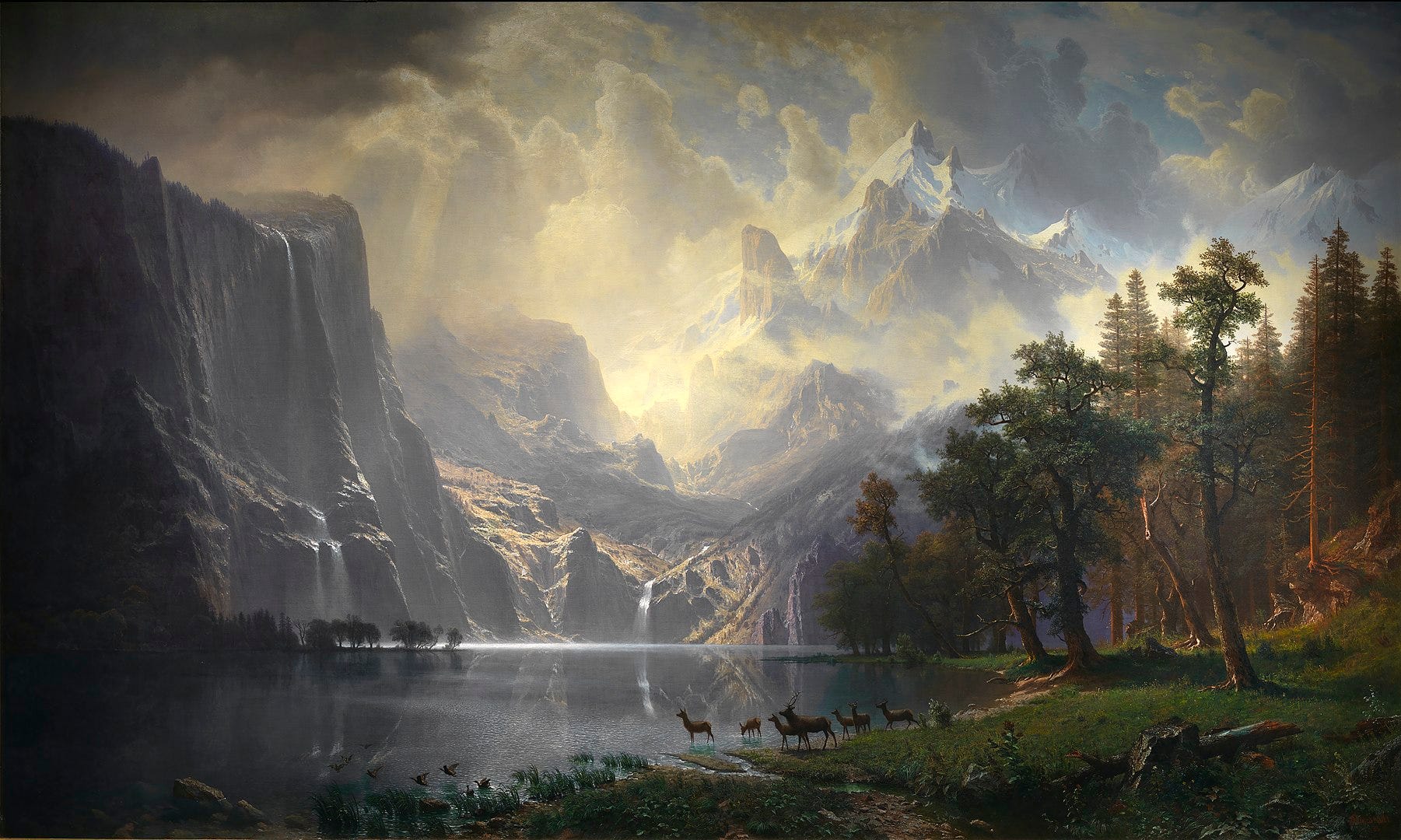

“The time will come when our successors will wonder how we could have been ignorant of a thing so obvious.”
— Seneca
Leaders begin with a powerful vision, communicate that vision relentlessly, and then execute on it.
But it starts with setting the vision so that every stakeholder understands what they’re trying to achieve.
Without that common ground—that shared experience—we lack the ability to move at the same pace or in the same direction.
That is, when we inhabit the same space but have a fundamentally different view of reality or of morality, it’s untenable.
A House Divided
When he accepted the nomination for U.S. Senator for Illinois in 1858, Abraham Lincoln gave his famous House Divided speech. The country was riven by the issue of slavery. Democrats were slave-holding oligarchs, Republicans were the party of the free north that opposed the expansion of slavery.
His opponent, Senator Stephen Douglas, sought compromise, looking for some middle ground. But for Lincoln, it was a question of principle. It was against this backdrop that Lincoln made his radical speech, declaring “A house divided against itself cannot stand.”
He chose that phrase and that principle because it came directly from three of the Gospels of the New Testament: Matthew, Mark, and Luke all tell the same story. And it was material with which Lincoln’s audience would have been familiar.
And in his opening, Lincoln made it clear that having a common understanding of the situation was essential:
“If we could first know where we are, and whither we are tending, we could then better judge what to do, and how to do it.”
We have to know who we were if we want to know who we are. And from there, we can forge a path to who we want to become.
When we look at the past or the present, a common reality is our map and compass, guiding us to our next waypoint. Without it, we’re lost.
“The less a man knows about the past and the present, the more insecure must prove to be his judgement of the future.”
— Sigmund Freud, 1927
The Big Truth
Any reasonable American can tell you who won the 2020 presidential election. But a swath of individuals seem hellbent on denying that reality; in fact, a handful of them went so far as to try to overturn it.
Recent information turned over to Congress from the former president’s chief of staff included a Power Point presentation on how to stage a coup.
To read through it is like entering an alternate universe, a jumble of conspiracy theories and extreme conclusions.
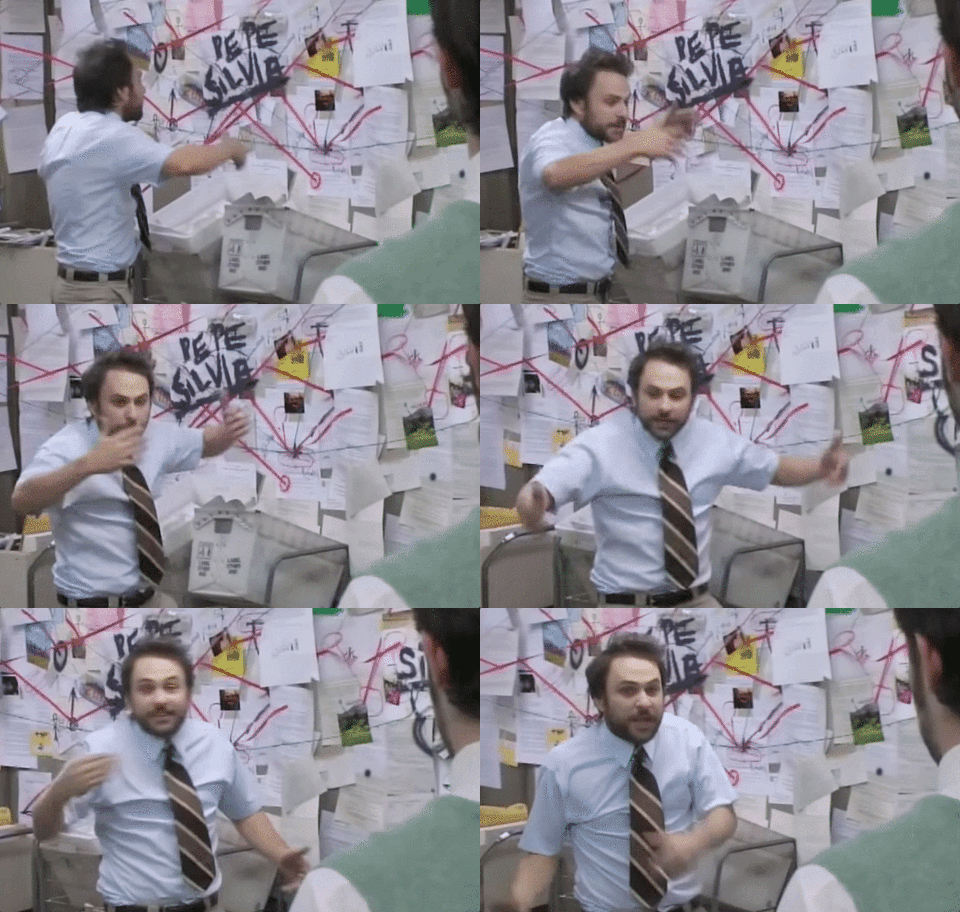
Simply put, it is not grounded in reality. How can we co-exist if this is the case?
A Shared Adventure
In the 1930s, the New Deal provided tangible proof that America was emerging from the Great Depression: roads, tunnels, bridges, dams, and other public works projects gave the country the infrastructure it needed and created jobs for so many previously unemployed people.
And radio was the primary means of interconnectedness, the medium shared reality that conveyed news and entertainment across the land.
“Americans gained a sense of their shared suffering, and shared ideals: they listened to one another’s voices.
“Beginning in 1938, for instance, F.D.R.’s Works Progress Administration produced a twenty-six-week radio-drama series for CBS called “Americans All, Immigrants All,” written by Gilbert Seldes, the former editor of The Dial. “What brought people to this country from the four corners of the earth?” a pamphlet distributed to schoolteachers explaining the series asked. “What gifts did they bear? What were their problems? What problems remain unsolved?” The finale celebrated the American experiment: “The story of magnificent adventure! The record of an unparalleled event in the history of mankind!””1
We don’t have the equivalent today (although a certain infotainment host created a documentary that attempted to whitewash the January 6 insurrection), because we live in a media-fractured world. Algorithms and social feeds power all.
And as you’ll see in the Timely section below, being surrounded only by people who think like us can leave us worse off.
The information (or misinformation) we consume determines our outlook on everything, from the food we eat, the cars we drive, and the government we seat.
When we don’t agree on basic truths—truths that in some cases are self-evident—we risk depriving ourselves of the rights we declared when this country was founded.
In the end, it isn’t about your truth or my truth. It’s the truth. We may all have different experiences, but that doesn’t change the facts. We must have some shared line of sight on those facts before we can have conversations about our varied experiences.
But if we can’t agree on basics, this house cannot stand.
“I do not expect the house to fall—but I do expect it will cease to be divided.”
The question is, can we ever share Lincoln’s optimism?
Only if we find common ground.

“The heritage of the past is the seed that brings forth the harvest of the future.” — Wendell Phillips
How Cartoons Created a Classically Literate Generation
If youre of a certain generation, Saturday morning cartoons were essential. “[T]hose cartoons did more than mind-numbingly entertain a generation of children. They also introduced millions of young people to key facets of cultural literacy, particularly in the realm of literature and music. Even if they never learned these elements in school, they at least had some frame of reference upon which they could build their understanding of the books and music and even ideas which have impacted culture and the world we live in today.” (Intellectual Takeout)
The Questionable Old Days
There’s a common misconception that memories are accurate records of the past, pristinely preserved in a mental filing cabinet. In reality, our brains play tricks on us, romanticizing the past and making the present seem less desirable. (The New York Times)
We Are What We Remember
Memory is an intrinsic part of our life experience. It is critical for learning, and without memories we would have no sense of self. Understanding why some memories stick better than others, as well as accepting their fluidity, helps us reduce conflict and better appreciate just how much our memories impact our lives. (Farnam Street)

“Memory, like a beauty that is always present to hear herself flattered, is flattered by everyone. But the absent and silent goddess, Forgetfulness, has no votaries and is never thought of; yet we owe her much. She is the goddess of ease, though not of pleasure.” — Thomas Paine, 1766
Truth, Justice, and the American Way
“American society has lost its faith in a shared truth. We simply don’t believe the same things anymore. In the battle to defend our particular versions of truth, we have badly weakened journalism, our historical institution of truth-telling.” (John Battelle’s Searchblog)
A Peaceful, Uneasy Feeling
“One way or another, citizens must agree on something in order to shape the inevitable and necessary dissensions in such a way that they do not cause civil war.” (Eurozine)
Extremely Deliberate
Harvard social scientist Cass Sunstein conducted in two different communities in Colorado: left-leaning Boulder and right-leaning Colorado Springs. Residents in each community were gathered into small groups to discuss their views on three controversial topics: climate change, same-sex marriage, and affirmative action. Afterward, participants were asked to report on the opinions of their discussion group as well as their own views on the subjects. “Deliberation much decreased diversity among liberals; it also much decreased diversity among conservatives. After deliberation, members of nearly all groups showed, in their post-deliberation statements, far more uniformity than they did before deliberation.” Being exclusively around like-minded people makes individuals more settled and extreme in their views. (The University of Chicago Law School Faculty Blog)

“And if all others accepted the lie which the Party imposed—if all records told the same tale—then the lie passed into history and became truth. ‘Who controls the past’ ran the Party slogan, ‘controls the future: who controls the present controls the past.'” — George Orwell, 1949
🎧 Jason Steinhauer had some thoughts about what media and history literacy (or illiteracy) is doing to us, and how technology shapes how we see ourselves. Don’t miss this episode of Timeless Leadership: History, Disrupted.

📚 In our current culture of conflict, Americans need a better way of relating to one another and responding to controversial issues; a way that transcends political partisanship and emphasizes universal care, mutual concern, and the flourishing of the common good. In A House Divided: Engaging Issues Through the Politics of Compassion, Mark Feldmeir suggests that the solution to our political entrenchment is a shared commitment to practicing a politics of compassion; the motivating, unifying ideals of the gospel that insist that we work together for the benefit of the common good.

There’s so much to learn,

“The Last Time Democracy Almost Died” by Jill Lepore, The New Yorker