


Welcome to Sunday Journal, a chance to start your week out with short, quiet reflections and advice for life.
This effort started with a handwritten journal I keep for each of my children, designed to give them a sense of how to become the best version of themselves. If you find this valuable, please share it with others.
Each edition contains three sections: reflections to put into practice, an inspirational quote, and an image to contemplate.
Today, a word about planning and sharing.

Reflection
There is an old military maxim, often attributed to Eisenhower, that no plan survives first contact with the enemy — and it is frequently used to excuse the absence of one. But Eisenhower himself never meant it that way. His point was that the act of planning is what matters. The rigorous thinking-through of contingencies, the alignment of purpose, the shared understanding of what we are trying to accomplish.
The plan is not a script; it is a shared map.
What leaders too often forget is that the map must be shared. A plan locked in one person’s head is not a plan — it is a wish. The communication of a plan is not a courtesy or an administrative burden; it is the completion of the plan itself. When people understand not just what they are to do, but why, and where their piece fits into the whole, they become capable of adapting intelligently when conditions change.
They exercise judgment in your direction rather than waiting for instruction. This is the difference between an organization that moves and one that merely responds.

Quote
“The most important thing is having a plan and communicating the plan.”
— Alan Mulally, in conversation, 2018

Image
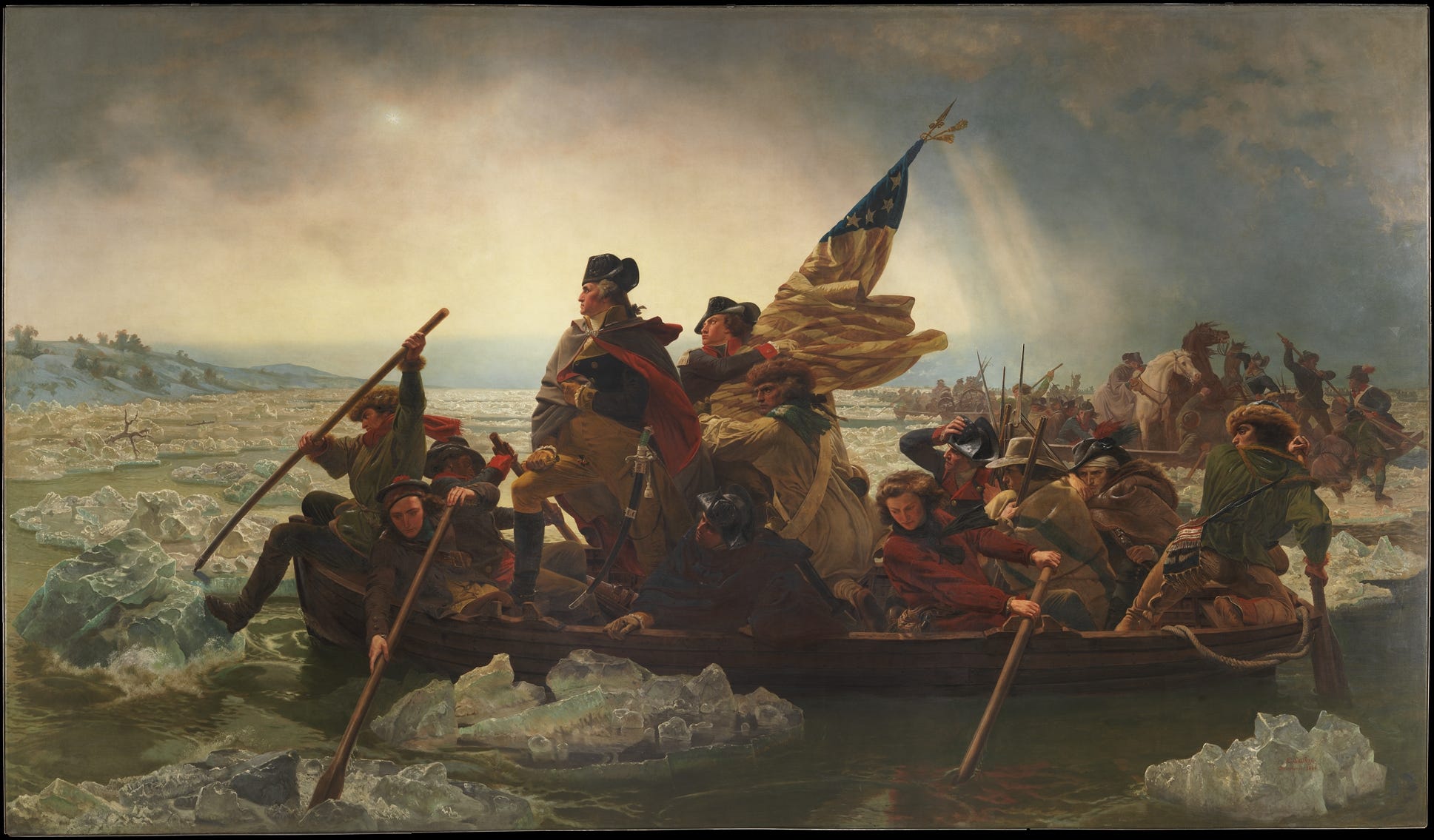
On the night of December 25–26, 1776, General George Washington crossed the ice-choked Delaware River with 2,400 men to strike the Hessian garrison at Trenton at dawn. The operation had been planned meticulously and communicated only to those who needed to know. The men pulled on their cloth-wrapped oars in silence and darkness. They succeeded because every man knew his role, trusted his officers, and understood the objective.
Leutze’s painting romanticizes the moment — Washington did not actually stand in the bow — but it captures something true: purposeful, forward motion, into the dark, with a plan.
There’s so much to learn,

P.S. I’m available to speak to your team about the Working Together© practices and principles that helped turn Ford around; they apply to teams of all sizes.