

Stop Waiting for a Revolution
The miracle you’re expecting is abdication dressed up as hope. Change requires participation.
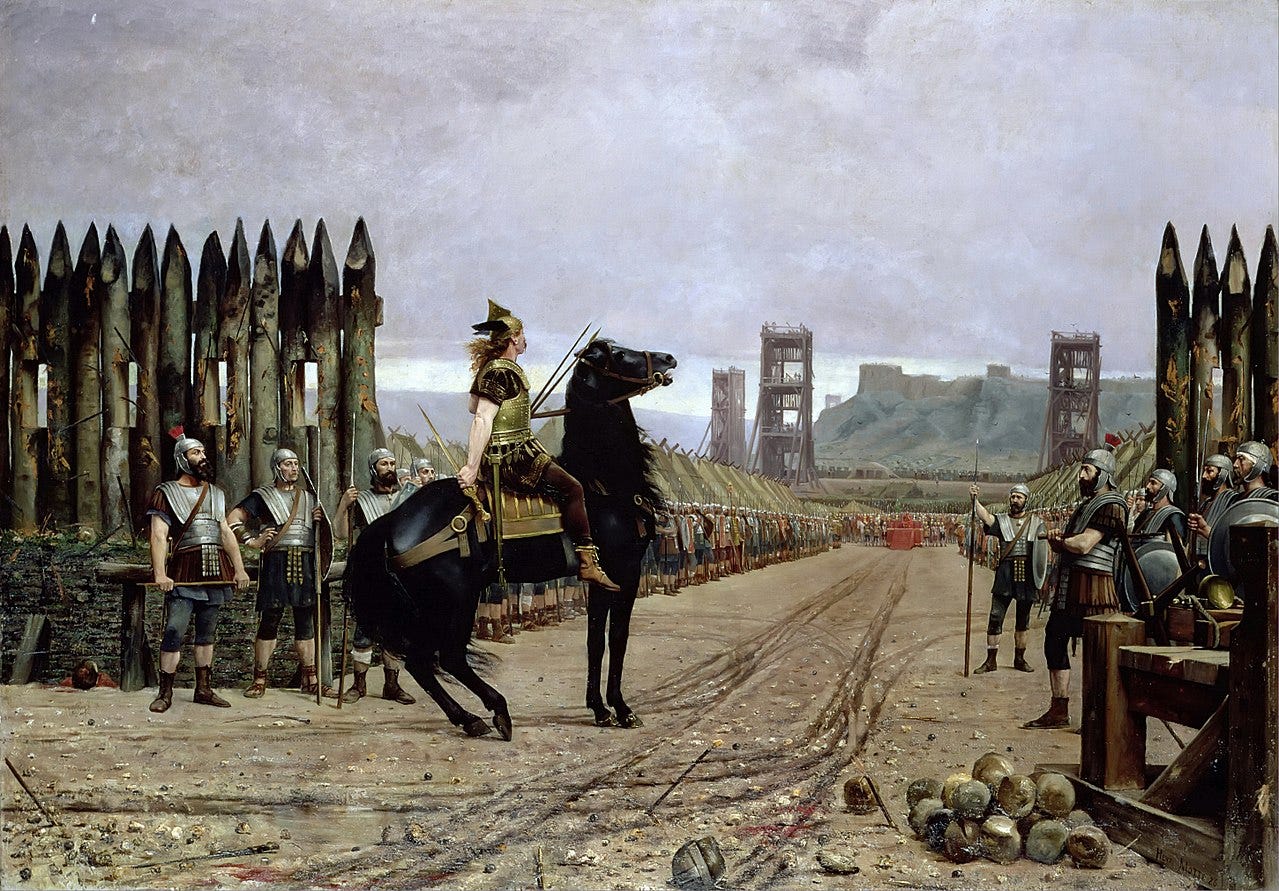

“If there is any period one would desire to be born in, is it not the age of revolution, when the old and the new stand side by side and admit of being compared, when the energies of all men are searched by fear and by hope, when the historic glories of the old can be compensated by the rich possibilities of the new era?”
— Ralph Waldo Emerson, 1837
Emerson called it an age of rich possibilities. He wasn’t wrong. He was also writing in a country that hadn’t abolished slavery, governed by a man who had marched Native Americans to their deaths. The “rich possibilities of the new era” depended entirely on who you were — and whether anyone in power thought you deserved one.
This is worth sitting with. History has a way of looking clean from a distance. Up close, every era of transformation is a negotiation between progress and its cost, between the people driving change and the people absorbing it.
If you’d rather be among the people driving change than absorbing it, this newsletter is for you.
If H.G. Wells had offered us his machine and we had stepped into any moment of great upheaval, we’d have found neither utopia nor catastrophe, but something murkier and more familiar: a world where the future was being written, and most people were waiting to see what it said.
The waiting is the problem.

Miracles Wanted
In 1938, Simone Weil wrote Oppression and Liberty from Paris, in a Europe already feeling the seismic pressure of what was coming. She was interested in what revolutions actually require — not the romantic image of masses rising as one, but the unglamorous machinery beneath it.
The word “revolution,” she noted, had become a watchword, a direction, a rallying cry. It was rarely a plan.
“One thinks nowadays of the revolution not as a solution to the problems raised at the present time but as a miracle dispensing one from solving problems.”1
“A miracle dispensing one from solving problems.” Read that phrase again, slowly.
It describes something we recognize in every era — the impulse to believe that if conditions become intolerable enough, change will simply arrive. As we sit behind our keyboards and screens, making gestures and words that have little impact except for the rush of dopamine, we wait and hope for change.
We hope that the right moment will produce the right leader. That someone else will step forward so we don’t have to. Weil was clear-eyed about this: waiting for revolution to drop from the skies is not patience. It’s abdication.
Change Requires Organization
Hannah Arendt reminds us that this may be an effect of the origin of the term. Originally, the word revolution was an astronomical term that indicated “a recurring, cyclical movement,” but that over time was adapted to our earthly plane:
“When the word first descended from the skies…it appeared clearly as a metaphor, carrying over the notion of an eternal, irresistible, ever-recurring motion to the haphazard movements, the ups and downs of human destiny, which have been likened to the rising and setting of the sun, moon, and stars since time immemorial.”2
The revolutions worth studying — the ones that actually moved something — weren’t spontaneous. They were organized, often quietly, by people who had decided not to wait.
People who had looked at the problem clearly, counted the cost honestly, and concluded that the discomfort of acting was preferable to the slow damage of not acting. They were not always famous before they led. They became recognizable because they led.
The Courage to Step Up
This applies at every level. The leader who redesigns a broken process before anyone else admits it’s broken. The manager who tells a hard truth in the room where comfortable fictions are preferred. The executive who steps into a failing culture and decides, without guarantee of success, to model something different.
None of these people waited for permission. None of them mistook motion for momentum, or consensus for courage.
The question Weil was really asking — the one that remains stubbornly current — is not whether revolution is coming. It’s whether anyone is willing to do the work it requires.
Not the inspiring speech. The work.
So here is the question to ask yourself this week and the weeks following: Whatever change you’ve been watching from a distance, waiting for — what would it look like to stop waiting? And are you the one with the standing, the skill, and the will to move it forward?
Because revolutions don’t drop from the skies. They begin with someone decides that the sky and those here on the ground have waited long enough.
There’s so much to learn,

Check out these related topics:
Oppression et liberté, Simone Weil. First published 1955. Gallimard: Paris. p. 128
On Revolution, Hannah Arendt, Penguin: London, 1963. p. 43
This taps into something I’ve been thinking about lately: the difference between agency (the capacity and perhaps even responsibility to act) and self-efficacy (the belief you have the *capability* to).
When it comes to these questions of action I'm genuinely curious about how much of this is a stance of "not my problem,” which is an agency issue, and one of “I don't know if there's anything to be done about it,” which is a self-efficacy issue. Both are necessary for change.