


Welcome to Off the Clock — where we step away from the urgent and indulge the enduring.
Every other Saturday, I send a private note to subscribers exploring the curious corners of language, history, and the words we think we know—but don’t.
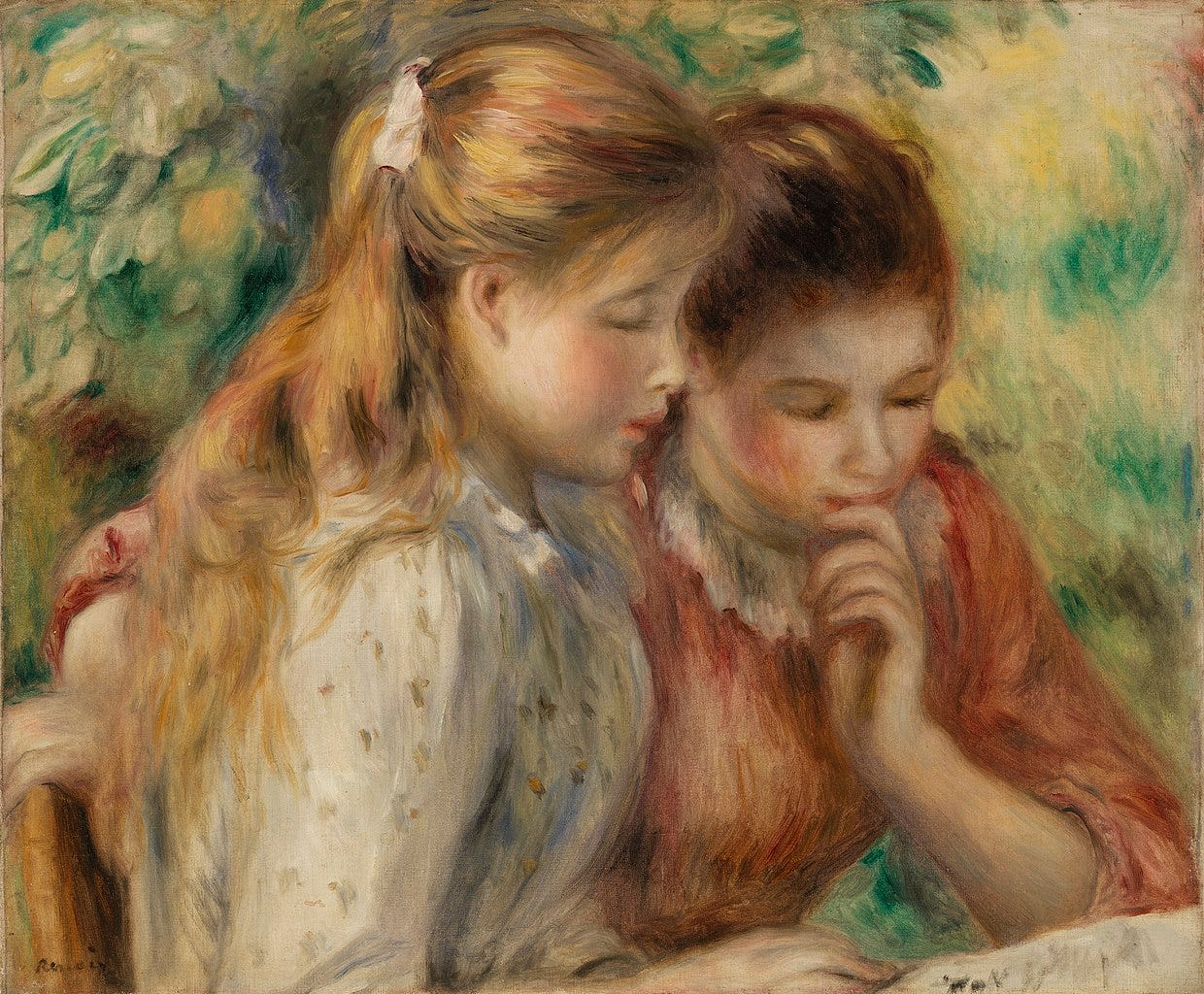
“The man who does not read good books has no advantage over the man who cannot read them.”
— Mark Twain, 1894
You’ve likely heard parents lamenting about their children showing no interest in reading. Heck, you might not even be a parent but have uttered that sentiment yourself. The reality is the kids are on their screens more than we’d like.
Some facts:
From 2020 to 2024, daily YouTube watching among children 12 and under climbed from 43 percent to 51 percent.1
The National Literacy Trust puts it even more starkly: only 20.8% of children age 8 to 18 read daily today, down from 7.5 percentage points since 2023.2
Fewer than 25% of children read for pleasure frequently, and 72% of children ages 5 to 17 say they would rather watch TV, play video games, or go online than read books.3
We have been here before. And the last time we were, the response was rather more elegant than press releases and studies.
A Bag of Books
In May 1966, Margaret McNamara — wife of then-Secretary of Defense Robert S. McNamara — brought a bag of used books to a Washington, D.C. tutoring session. When she told four boys they could each choose one to keep, their astonishment told her something: these children had never owned a book.
By November of that year, with a $150,000 Ford Foundation grant and the help of co-founders Lynda Johnson Robb and Kathryn Wentzel Lumley, Reading Is Fundamental had launched in three D.C. elementary schools. By the time of McNamara’s death in 1981, RIF had put 37 million books into the hands of more than 3 million children. The number today: 450 million books, 100 million kids.
The pitch was disarmingly simple. Here is a book. You picked it. Keep it. No algorithm. No upsell. Just a child and the radical notion that the book was hers.
For folks of a certain generation, RIF also meant television — omnipresent PSAs on Saturday morning cartoon blocks that lodged the phrase Reading is Fun-da-Men-tal so deeply in the brain that it still surfaces unbidden, decades later, in the cereal aisle.
Enter the Electrifying Tom Lehrer
If RIF handled the supply side of childhood literacy, The Electric Company — the Children’s Television Workshop’s follow-up to Sesame Street, aimed at readers who had outgrown cookie-eating monsters — took care of demand. And one of its secret weapons was a Harvard mathematician and satirist who, by 1972, had quietly walked away from the concert stage.
Tom Lehrer, who passed away on July 26, 2025 at the age of 97, wrote eleven songs for the show. As we noted last August,4 Lehrer had a profound impact on a few generations of people, due to his creative use of language in song. The most famous of his Electric Company contributions is “Silent E” — a two-minute animated lesson in the magic-E rule, built on a melody so well-constructed that you cannot listen to it without smiling.
Here Lehrer describes his association with The Electric Company:
“It’s obviously important to teach children to read, but its’ equally as important to get them to want to read…The Electric Company tried make reading enjoyable as well as instructive by providing interesting and amusing contexts for the words.”
— Tom Lehrer
Lehrer once observed that the same logical precision that drew him to mathematics drew him to lyrics. Both demand economy. Both punish a careless syllable. And both, when right, produce something that fits.
The result was grammar instruction so good that generations of children absorbed the long-vowel rule of Silent E without knowing they were learning anything at all.
RIF and The Electric Company were doing complementary work in the same decade: one put a book in a child’s hand; the other put the key to open it in her head. Neither alone would have been enough.
🔒 This post is for paid subscribers.
Below: why every adult panicking about screen time should look in the mirror first — and what RIF and Tom Lehrer can still teach us that we’ve forgotten.
Paid subscribers receive the full archive, the weekly Timeless & Timely essay, Off the Clock and Sunday Journal fortnightlies, and the comment community. Just a few dollars a month — and considerably more surprising than anything the algorithm will serve you this weekend.

_-_BF107_-_Barnes_Foundation.jpg)