How to Respond to an Act of Disrespect
Don’t add to the indignity of the situation
“Moderation in temper is always a virtue; but moderation in principle is always a vice.”
— Thomas Paine, 1792
Have you ever found yourself speechless?
Maybe you find yourself in a familiar situation and someone — most likely someone familiar or close to you — says something completely unexpected.
You’re left with a sense of unease, feeling as if you’ve been knocked off-balance. Your mind swirls, your heart beats quickly, and you struggle for words as you try to recover from this verbal blow.
It’s a lamentable scenario, as someone has put you on the spot. What’s the best way to respond in such a situation?
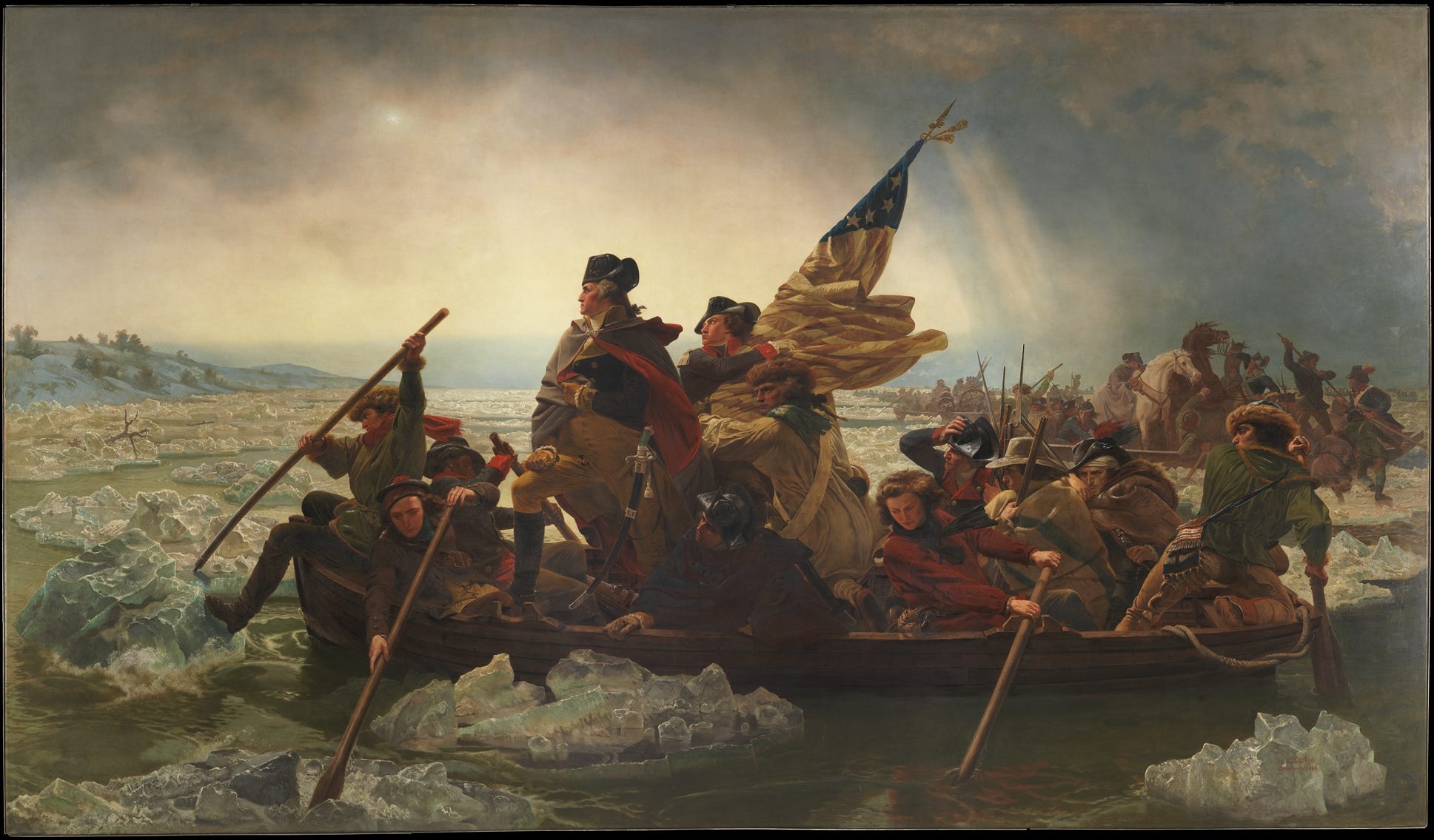
I was recently reading about just such an occurrence in the life of George Washington that illustrated this perfectly.

In Valiant Ambition: George Washington, Benedict Arnold, and the Fate of the American Revolution, Nathaniel Philbrick recounted a time when the general was faced with just such a dilemma.
It was December 1776 and morale was flagging. Volunteer troops had promised to join the Continental Army for a year, and their time was nearly up. Washington was desperately trying to give this assembled group some confidence following defeats in New York and New Jersey, and the crossing of the Delaware was just days away; the Battle of Trenton would happen in a few weeks.
During this period, he opened a letter Major General Charles Lee, his second in command, addressed to Adjutant General Joseph Reed, assuming it was official business. Reed was, up until that time, one of Washington’s trusted colleagues. What Washington found set him on his heels.
Reed and Lee established separate line of communication and expressed their lack of confidence in Washington’s leadership, in particular the indecision which plagued him in recent campaigns. Lee wrote:
“I…lament with you that fatal indecision of mind which in war is a much greater disqualification than stupidity or even want of personal courage… Eternal defeat and miscarriage must attend the man of the best parts if cursed with indecision.”
Washington was notoriously self-conscious, so this must have touched a raw nerve.
But his response was one of a tempered disposition and good judgment: even though he felt personally betrayed, Washington held back:
“Washington could have angrily confronted his adjutant general; instead he forwarded Lee’s letter to Reed with a note of apology:
“‘Having no idea of its being a private letter,’ he explained ‘much less suspecting the tendence of the correspondence, I opened it, as I had done all other letters to you [relating to] the business of your office…This, as it is the truth, must be my excuse for seeing the contents of a letter which neither inclination or intention would have prompted me to.’
“Leaving Reed to twist in the icy emptiness of his withheld wrath, Washington refused to even mention the contents of Lee’s letter. Not until more than six months later did Washington finally respond to Reed’s repeated attempts to explain himself.
“‘I was hurt, not because I thought my judgment wronged by the expressions contained in [the letter], but because the same sentiments were not communicated immediately to myself.’”
It was under these circumstances — knowing that his top two lieutenants were talking about him behind his back — that Washington led the retreat across New Jersey.
And yet, he conducted himself with honor and dignity, as witnessed by James Monroe, who would eventually become the fifth president of the United States:
“A deportment so firm, so dignified but yet so modest and composed I have never seen in any other person.”
The lesson is clear: resist the temptation to get embroiled in a battle of words. Take the time to settle your mind, find clarity, and maintain your dignity.
“I have often repented speaking, but never of holding my tongue.”
— Xenocrates
When you simply let people know you’re aware of their machinations but choose not to engage them, you send a message that you are strong, self-composed, and wise.
Such are the virtues of leadership.
There’s so much to learn,