

Collaboration: A Musical Metaphor
Nothing great is ever achieved in solitude.
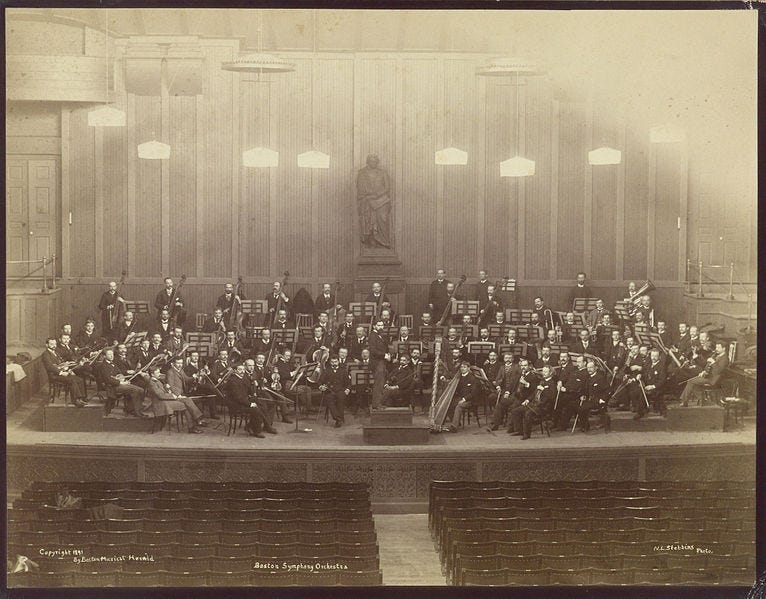
“As oil will find its way into crevices where water cannot penetrate, so song will find a way where speech can no longer enter.”
— Harriet Beecher Stowe, 1856
Even the most brilliant composer needs others to bring a creation to life.
In 1974, a young director making his first theatrical film asked a composer to take a chance on him. The film was The Sugarland Express. The director was Steven Spielberg. The composer was John Williams.
What followed is one of the most enduring creative partnerships of the modern age.
Last month, as John Williams celebrated his 94th birthday, I was listening to an episode of The Legacy of John Williams Podcast.1 In that episode, there’s an excerpt from the AFI Masterclass with Steven Spielberg and John Williams (2011) in which they describe their partnership:
Steven Spielberg:
“One of the greatest honors that I have ever received in my life was the first time that John said yes to the movie that I wanted him to score, which was The Sugarland Express. And that was the beginning of a collaboration which next year, in 2012, will mark the 40th year that we have been working exclusively together. And I’m excited about that.”
John Williams:
“Forty years is incredible with any collaboration, I think, Steven. Ours has been a special evolution, certainly. But in the 40 years we have been working together, he’s never once said to me, I don’t like that, or this won’t work, or we need to do something else.
He’s never said that. He’s enjoyed everything that I’ve done, as I have with him. And I may say to him, and he may say to me, maybe we’ll try something else.
That might be fun. But he’s enjoyed everything, even the mistakes. One of the things about collaboration is the ability to, that will make it work.
I think it’s the ability to be unguarded enough to make the mistakes you need to make, not compete with each other, not try to impress each other, just have fun with it. And that unbuttoned trust is the essential thing, I think, that if it’s there in the chemistry of the personalities, a lot of fun can be had working together.”
There are partnerships—and then there are systems.
What Spielberg and Williams describe isn’t luck. It’s discipline. It’s design. It is, in many ways, a living case study in the principles of the Working Together Leadership & Management System.2
Ode to Working Together
First Movement: Collaboration, Not Coordination
Most teams divide labor. Few truly compose together.
A film score is the perfect metaphor. The composer writes, yes — but only in response to story, pacing, emotion, silence. The director shapes the vision, but relinquishes control over how it will sound. Neither owns the outcome entirely; both are accountable for it completely.
That’s collaboration at its highest level: interdependence without insecurity.
Second Movement: Creating a Better Plan — by Not Clinging to One
Williams notes that neither of them says, “this won’t work.” Instead, they offer: maybe we’ll try something else.
This is not avoidance of standards; it is avoidance of ego.
In Working Together terms, the plan is always provisional. It improves through iteration, not assertion. The moment critique becomes personal, the plan stops getting better. What Spielberg offers Williams is a clear path with encouragement: keep moving, keep shaping, keep discovering.
A better plan emerges not from sharper criticism, but from safer exploration.
Third Movement: A Find-a-Way Attitude
There is a subtle but powerful shift in language here. Not whether something works, but what else might.
“Maybe we’ll try something else.”
That is the essence of find-a-way. It assumes forward motion. It reframes obstacles as options. It replaces judgment with curiosity.
Over forty years, that posture compounds. It turns friction into fuel.
Fourth Movement: Enjoying the Journey — and Each Other
“Even the mistakes,” Williams says.
Most organizations tolerate mistakes. Few enjoy them.
But enjoyment is not frivolous; it is functional. It lowers defenses. It invites risk. It sustains energy over decades, not quarters. When people genuinely enjoy working together, they stay in the work long enough to become exceptional at it.
This is the overlooked advantage of great teams: they outlast everyone else.
Coda: Bringing It All Together
There is one final phrase worth lingering on: “unbuttoned trust.”
Not blind trust. Not forced trust. Unbuttoned. As in relaxed, open, or vulnerable.
It is the absence of pretense, the removal of performance, the quiet confidence that the work — and the relationship — can withstand a wrong note. It is a sense of psychological safety that we create for each other out of our sense of trust.
When that kind of trust is built into our culture, it weaves a safety net so strong that individuals and teams are able to achieve so much more because they know they are there for each other.

In leadership, we often look for frameworks, models, and systems to improve performance.
Spielberg and Williams offer something both simpler and harder: create the conditions where people can do their best work together — unguarded, iterative, and in good company.
The rest, like a great score, tends to follow.
There’s so much to learn,

P.S. Make sure you join us for Off the Clock on Saturday when we’ll continue our leitmotif and look at musical terms that have crept into non-musical vocabulary.
“Words and Music by John Williams” on The Legacy of John Williams Podcast. By the way, isn’t theirs the most brilliant logo? Take a long look at it:

Feel free to poke around my site to explore how I can bring the Working Together Leadership System to a group you care about.