

Before We March Forward
Whether at war or peace, at work or at home, these elements matter
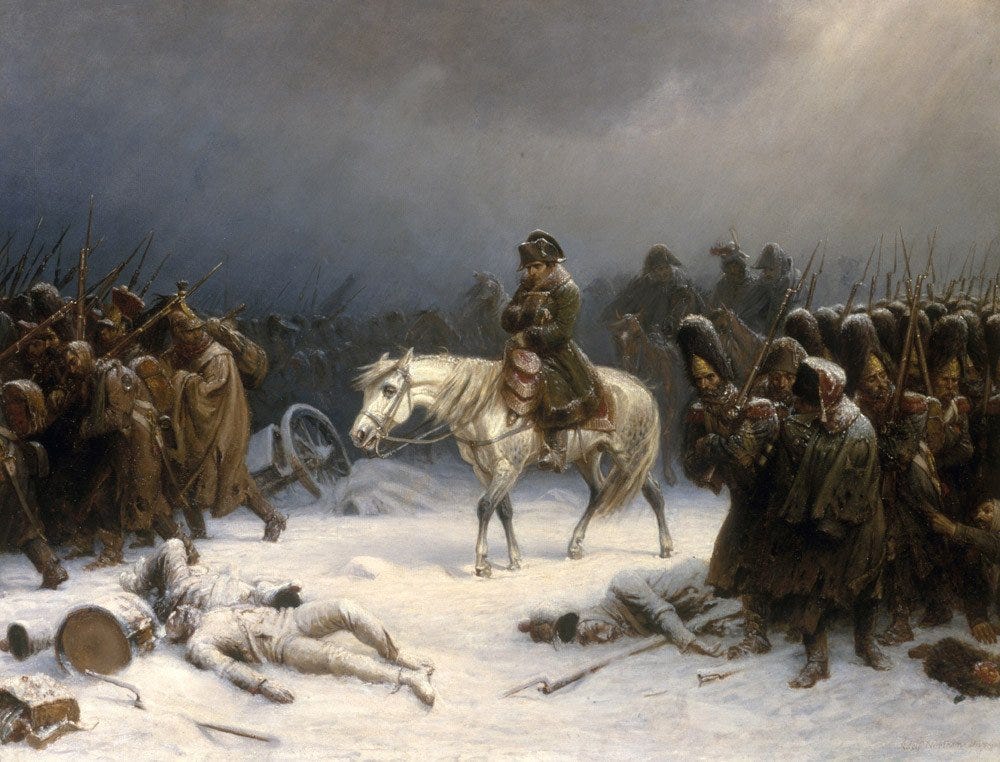

“We have less reason to fear what might happen tomorrow than to beware of what happened yesterday.”
— Arab proverb
We are told we are at war.
Whether one prefers softer language or sharper phrasing is beside the point. History will not be impressed by euphemism. It never has been.
At a minimum, such undertakings deserve clarity — a stated vision, defined objectives, and some demonstration that the past has been consulted before the future is wagered.
As Lewis Lapham once wrote, tracing the long arc of conflict across the cradle of civilization:1
“Pick up the thread of the narrative in Babylon in the days of Cyrus the Great, move forward in time to the triumphs of Alexander of Macedon, student of Aristotle, to Caesar’s legions governing what they knew as the province of Mesopotamia, through the centuries of languid despotism imposed on the valley of the Euphrates by the grand viziers of the Sublime Porte, to the division of the Ottoman spoils at the Treaty of Versailles…”
Civilizations have marched confidently into that region for millennia. Confidence, it turns out, is not the same as comprehension.
Understanding the navigation of the past is just as essential as keeping a steady hand on the tiller of the future — whether on the battlefield, in the boardroom, on the playing field, or around the kitchen table.
And that is where this conversation truly belongs.
Because crisis is not confined to geopolitics. It visits families. It disrupts organizations. It unsettles teams. It exposes the fractures that were already present but previously manageable.
In times of crisis or uncertainty, three things tend to fracture simultaneously: clarity, confidence, and cohesion. Vision and strategy restore all three.
This is precisely why Working Together© is welcome and necessary — not only a system, but a way of living — particularly when dealing with uncertainty.2
Why Vision and Strategy Matter
1. Vision Provides Meaning When Circumstances Create Fear
In a crisis, people do not merely ask, “What do we do?” They ask, often silently, “What does this mean for me?”
A compelling vision answers the deeper question.
It reminds the organization:
Who we are
Why we exist
What future we are building together
When markets shift, budgets tighten, or public pressure mounts, tactical adjustments may change weekly. Vision should not. It is the stabilizing narrative that says: The destination still matters, even if the route must adapt.
Without vision, uncertainty produces anxiety. With vision, uncertainty becomes challenge.
Vision anchors the why so that people can endure the what.
2. A Strategic Plan Converts Hope Into Direction
Vision without strategy is inspiration without infrastructure. Or, as Henry Ford put it, “Vision without execution is hallucination.”
A comprehensive strategy translates aspiration into clear priorities, defined roles, measurable outcomes, and sequenced actions. All of these are required for accountability.3
In crisis, ambiguity multiplies. People begin duplicating work, protecting turf, or freezing entirely. A plan eliminates guesswork. It provides:
Alignment — Everyone understands the priorities.
Focus — Energy is directed where it matters most.
Discipline — Decisions are evaluated against agreed objectives.
Adaptability — Adjustments are made within a coherent framework, not in panic.
A strategic plan turns motion into progress. Without it, organizations confuse activity with advancement, especially under pressure.
3. Vision and Strategy Build Trust in Leadership
In uncertain times, people watch leaders more closely than ever. They look for two signals:
Do they know where we are going?
Do they know how we intend to get there?
When leaders communicate a clear vision and a coherent strategy, they demonstrate steadiness. They project competence without pretending to possess omniscience.
Trust is not built on perfect prediction, but on visible intention and actions consistent with it.4
Working Together depends on trust because it requires voluntary commitment. People must believe that:
The direction is sound.
The plan is thoughtful.
Their effort matters.
Clarity earns that belief.
4. Crisis Magnifies the Cost of Misalignment
In stable times, inefficiencies are expensive but survivable. In crisis, they are fatal.
When we have a shared vision, we gird ourselves against fragmentation, internal competition, and working at cross purposes.
Our comprehensive plans:
Coordinate resources.
Prevent reactionary decision-making.
Ensure short-term survival does not sabotage long-term viability.
Working Together means collaboration. Collaboration requires alignment. Alignment requires clarity of direction.
5. Vision Sustains Morale; Strategy Sustains Momentum
Morale declines when people feel powerless, unmoored, uncertain about impact and direction.
A compelling vision restores dignity5 to work. It tells people they all matter and their efforts contribute to something enduring and worthwhile — something bigger than themselves.
Having a strategic plan answers questions like:
What do we do today?
What must we do next?
How will we know we’re succeeding?
Together, vision and strategy transform paralysis into purposeful movement.
6. Vision Provides Continuity; Strategy Enables Adaptation
Crises, whether driven by internal malfunctions or external forces, often demand rapid change. But change without continuity creates instability.
Here’s where the difference and the combination of vision and strategy matter:
Vision is enduring.
Strategy is adaptive.
The vision defines the future state; it tells us where we are heading.
Strategy evolves in response to reality; it is the plan we implement and constantly update in response to changing conditions.
This distinction is critical. When leaders conflate the two, they either cling rigidly to outdated plans, or abandon direction entirely in pursuit of short-term survival.
A clear vision allows flexibility in execution without sacrificing identity.
7. Working Together Requires Shared Direction
The system is called Working Together for a reason.
People cannot truly work together unless they agree on:
Where they are headed
What success looks like
How their roles interconnect
Vision creates shared aspiration; strategy creates coordinated action.
Without both, “working together” becomes merely “working near each other.”
In Times of Uncertainty, Clarity Is Compassion
Perhaps most importantly, clarity is a form of leadership generosity. In uncertain environments, people carry private burdens:
Financial worries
Professional insecurity
Personal strain
When leaders provide a compelling vision and a coherent strategy, they reduce cognitive load. They replace rumor with direction. They replace anxiety with agency.
That is not merely operationally wise.
It is human.
The Essential Principle
Within the Working Together Leadership & Management System:
Vision answers “Why?”
Strategy answers “How?”
Execution answers “What?”
Culture answers “Who?”
In crisis, every one of these matters — but vision and strategy come first. They transform chaos into coordination, fear into focus, and uncertainty into disciplined movement.
Without them, leadership becomes reactive. With them, leadership becomes resilient.
And resilience is what allows people — and organizations — to work together when it matters most.6
There’s so much to learn,
“The Gulf of Time,” Lapham’s Quarterly Vol. I, No. 1, Winter 2008
Check our archives on the topic of Accountability. There’s a lot there, including a couple of podcast episodes.
More on Resilience in our archives. You can browse all topics here.
👏👏💕